When you were mentioning the gender of nouns in the Romance languages, it made me think of some words where the languages don’t even agree. In French it’s La mer but El mar in Spanish. Or El fin in Spanish and La fin in French.My two cents' worth:
Strictly speaking, gender is a phenomonon of language. We see it clearly in Romance languages such as Italian or French. Nouns and pronouns are either masculine or feminine, and verb forms have to agree with the gender of the noun or pronoun. I have more experience with German, which has three genders: masculine, feminine, and neuter. The origin of the gender of some nouns is obvious, but for the life of me, I don't see why, in German, a table is masculine. There may have been, in the murky depths of the language's history, a "sexual" reason for such things. But when the word "magd" (girl), which is feminine, has the diminutive suffix "chen" (little) added to it, it becomes neuter. Go figure.
All this is to say that the very word "gender," which had rigid lines of demarcation in the grammar of languages (I believe there are languages that have more than three genders), had been carried over into discussions of human behavior. I wish we had another word to use besides gender.
Biological sex is, with the rare exceptions of XXY and XYY, binary, with the XX or XY imprinted in every cell of a person's body. Gender, is the sense of a language's structure, is also rigid. That is why we have such confusion when it comes to using a person's preferred pronoun. We are trying to apply something fixed (gender pronouns) to something as fluid as a person's perceptions of themselves and the way they express it in their behavior.
You can see the confusion in that last sentence. In "proper" English usage, I would have used himself instead of themselves, he expresses instead of they express, and his instead of their. In order to express an idea in an acceptable, "non-judgemental" and politically correct way, I've
Navigation
Install the app
How to install the app on iOS
Follow along with the video below to see how to install our site as a web app on your home screen.
Note: This feature may not be available in some browsers.
More options
You are using an out of date browser. It may not display this or other websites correctly.
You should upgrade or use an alternative browser.
You should upgrade or use an alternative browser.
What does gender mean to you?
- Thread starter KrisOPossum
- Start date

stickygirl
All the witches
- Joined
- Jan 3, 2012
- Posts
- 23,692
I hope I won't spin this thread off its axis, but a thought occurred after reading @RobLivesInTexas post.
In the UK I've heard people hesitate, even apologise, for using the word 'partner'. Typically "Sorry, I said partner, but I meant his girlfriend, but I'm not sure if I can say that these days..." I've tried a few times to explain the rationale why partner is the best term to use.
If a guy, Steve, has a boyfriend, a friend might 'out' him in casual conversation "I was giving Steve's boyfriend a hand to fix his car." What has been said isn't inaccurate, but if malevolent ears were listening, they might judge Steve for being homosexual: maybe they wouldn't give Steve that job or not invite him to a social function?
If instead everyone uses the neutral term 'partner' then no one is the wiser. If that malevolent listener, Bob, wants to push for information "Huh! Partner! Does Steve have a girlfriend or a boyfriend?" then they have to out themselves as being 'phobic and nosey. "Why do you ask [what their gender is]?" is the follow up question to Bob, who may make a little homophobic performance... we've all seen those.
At my sailing club, there are lots of older men and their reflex is to declare 'me no homo' or worse still 'Well they can do whatever they like, but they better not try anything on me.' I understand their cultural background - people who grew up with homophobia on the tv every night, using terms like 'poofter' 'shirtlifter' 'gay boy' or 'queer'... the list endless. Happily there are quite a few who simply shrug and offer no comment.
Times change. Language changes. Generations come and go. I have faith that by the time I'm an old lady, things will be better... assuming we survive the next pandemic, global warming, overpopulation and nuclear catastrophes...
*apologies to anyone called Bob.
In the UK I've heard people hesitate, even apologise, for using the word 'partner'. Typically "Sorry, I said partner, but I meant his girlfriend, but I'm not sure if I can say that these days..." I've tried a few times to explain the rationale why partner is the best term to use.
If a guy, Steve, has a boyfriend, a friend might 'out' him in casual conversation "I was giving Steve's boyfriend a hand to fix his car." What has been said isn't inaccurate, but if malevolent ears were listening, they might judge Steve for being homosexual: maybe they wouldn't give Steve that job or not invite him to a social function?
If instead everyone uses the neutral term 'partner' then no one is the wiser. If that malevolent listener, Bob, wants to push for information "Huh! Partner! Does Steve have a girlfriend or a boyfriend?" then they have to out themselves as being 'phobic and nosey. "Why do you ask [what their gender is]?" is the follow up question to Bob, who may make a little homophobic performance... we've all seen those.
At my sailing club, there are lots of older men and their reflex is to declare 'me no homo' or worse still 'Well they can do whatever they like, but they better not try anything on me.' I understand their cultural background - people who grew up with homophobia on the tv every night, using terms like 'poofter' 'shirtlifter' 'gay boy' or 'queer'... the list endless. Happily there are quite a few who simply shrug and offer no comment.
Times change. Language changes. Generations come and go. I have faith that by the time I'm an old lady, things will be better... assuming we survive the next pandemic, global warming, overpopulation and nuclear catastrophes...
*apologies to anyone called Bob.
RobLivesInTexas
Ever-Horny Man
- Joined
- Jun 3, 2023
- Posts
- 535
Your use of the "boyfriend" wording is interesting. If a woman talks about her "girlfriends," no one raises an eyebrow. But if a man talks about his "boyfriends," there will be hell to pay with many people. Even if he means the guys he goes hunting with or watches the Superbowl with. I hope we can get to the point in our society where people don't even "simply shrug and offer no comment."I hope I won't spin this thread off its axis, but a thought occurred after reading @RobLivesInTexas post.
In the UK I've heard people hesitate, even apologise, for using the word 'partner'. Typically "Sorry, I said partner, but I meant his girlfriend, but I'm not sure if I can say that these days..." I've tried a few times to explain the rationale why partner is the best term to use.
If a guy, Steve, has a boyfriend, a friend might 'out' him in casual conversation "I was giving Steve's boyfriend a hand to fix his car." What has been said isn't inaccurate, but if malevolent ears were listening, they might judge Steve for being homosexual: maybe they wouldn't give Steve that job or not invite him to a social function?
If instead everyone uses the neutral term 'partner' then no one is the wiser. If that malevolent listener, Bob, wants to push for information "Huh! Partner! Does Steve have a girlfriend or a boyfriend?" then they have to out themselves as being 'phobic and nosey. "Why do you ask [what their gender is]?" is the follow up question to Bob, who may make a little homophobic performance... we've all seen those.
At my sailing club, there are lots of older men and their reflex is to declare 'me no homo' or worse still 'Well they can do whatever they like, but they better not try anything on me.' I understand their cultural background - people who grew up with homophobia on the tv every night, using terms like 'poofter' 'shirtlifter' 'gay boy' or 'queer'... the list endless. Happily there are quite a few who simply shrug and offer no comment.
Times change. Language changes. Generations come and go. I have faith that by the time I'm an old lady, things will be better... assuming we survive the next pandemic, global warming, overpopulation and nuclear catastrophes...
*apologies to anyone called Bob.
On the other hand, people who seem obsessed with establishing "gender" as a world-shaking issue confuse me. Maybe it's my more traditional outlook on life, maybe it's my own bisexuality. But don't expect me to always fully embrace and celebrate your understanding of yourself. It's simply not an issue with me, and as long as you let me live my life, I'll let you live yours.
It's somewhat similar to celebrating the fact that you are from a particular country or culture. Go ahead and have your celebration, throw a party, but if I don't join your parade, don't accuse me of xenophobia. It's simply that your culture or ethnicity don't matter to me. (That is, unless you're going to treat me to a nice dinner of your style of food! Then I'll be interested.
 )
)
AlexBailey
Kinky Tomgirl
- Joined
- Sep 12, 2019
- Posts
- 11,359
(Please note that I am not breaking the forum age rules with this post because none of the content is sexualizing of children.)
I was raised mostly by my mom as a tag-along little brother to a sister who was active in theater, dance, competitive ice skating…
A lot of the groups my sister went to were for girls only, I was little and had long curly hair until grade school, many people assumed I was a girl - a rough little tomboy. I remember other moms trying to coach me to be more like my sister and not be such a mess.
Up into my twenties I was commonly misgendered, partly because I had a butch lesbian girlfriend and we hung out with a bunch of self proclaimed “dykes”. I presented more feminine than many of the women I knew.
I’ve seen a stark difference in how some people act towards me when they make different assumptions about my gender, and I saw it happen many times to my sons as they were growing up.
One day when my kids were small we were waiting outside on the big wooden porch of a restaurant, letting the kids run off some crazy energy. An older cowboy looking man came up the stairs and smiled at my boys and said, “Excuse me please, young ladies.”
The three boys stopped dead in their tracks and looked at the guy like he was from Mars, my middle son giggled and said “we’re all boys”.
The cowboy nearly choked on the last drag of his cigarette, threw it down and crushed it into the wooden porch with the pointy toe of his cowboy boot, sneered and said, “With hair like that you all look just like a bunch of girls.”
My middle kid said, “It’s not my hair that make me a girl, it’s my penis that makes me a boy.”
The cowboy turned pale, like he’d never heard a kid say the word “penis” before. He sneered at all of us, shook his head and went on his way.
My son still remembers that and has changed his position about a penis defining gender. He points out that as far as that cowboy was concerned they were all girls. Why did it matter to the cowboy what gender my kids were? For some reason the girls get “Excuse me, young ladies” but the boys with long hair get a disgusted sneer.
I had that kind of thing happen to me countless times when I was younger, “Oh, can I help you with that?” Then I open my mouth and my unmistakably male voice shocks them. I’ve had people be rude to me afterwards.
Why the difference? It’s not like they’re all expecting to breed with every female they meet, why such stark contrast in social interactions? Unfortunately being faced by those who do not conform with their expectations can be uncomfortable for some people.
I think a lot of people are not consciously aware of these social dynamics and assume their perspective is intrinsically “correct”, it’s only conversations, experience, and new knowledge that will change minds.
Thanks to you who seek better and broader knowledge and understanding.
I was raised mostly by my mom as a tag-along little brother to a sister who was active in theater, dance, competitive ice skating…
A lot of the groups my sister went to were for girls only, I was little and had long curly hair until grade school, many people assumed I was a girl - a rough little tomboy. I remember other moms trying to coach me to be more like my sister and not be such a mess.
Up into my twenties I was commonly misgendered, partly because I had a butch lesbian girlfriend and we hung out with a bunch of self proclaimed “dykes”. I presented more feminine than many of the women I knew.
I’ve seen a stark difference in how some people act towards me when they make different assumptions about my gender, and I saw it happen many times to my sons as they were growing up.
One day when my kids were small we were waiting outside on the big wooden porch of a restaurant, letting the kids run off some crazy energy. An older cowboy looking man came up the stairs and smiled at my boys and said, “Excuse me please, young ladies.”
The three boys stopped dead in their tracks and looked at the guy like he was from Mars, my middle son giggled and said “we’re all boys”.
The cowboy nearly choked on the last drag of his cigarette, threw it down and crushed it into the wooden porch with the pointy toe of his cowboy boot, sneered and said, “With hair like that you all look just like a bunch of girls.”
My middle kid said, “It’s not my hair that make me a girl, it’s my penis that makes me a boy.”
The cowboy turned pale, like he’d never heard a kid say the word “penis” before. He sneered at all of us, shook his head and went on his way.
My son still remembers that and has changed his position about a penis defining gender. He points out that as far as that cowboy was concerned they were all girls. Why did it matter to the cowboy what gender my kids were? For some reason the girls get “Excuse me, young ladies” but the boys with long hair get a disgusted sneer.
I had that kind of thing happen to me countless times when I was younger, “Oh, can I help you with that?” Then I open my mouth and my unmistakably male voice shocks them. I’ve had people be rude to me afterwards.
Why the difference? It’s not like they’re all expecting to breed with every female they meet, why such stark contrast in social interactions? Unfortunately being faced by those who do not conform with their expectations can be uncomfortable for some people.
I think a lot of people are not consciously aware of these social dynamics and assume their perspective is intrinsically “correct”, it’s only conversations, experience, and new knowledge that will change minds.
Thanks to you who seek better and broader knowledge and understanding.
stickygirl
All the witches
- Joined
- Jan 3, 2012
- Posts
- 23,692
I agree with the boyfriends point. Can you suggest why that's the case?Your use of the "boyfriend" wording is interesting. If a woman talks about her "girlfriends," no one raises an eyebrow. But if a man talks about his "boyfriends," there will be hell to pay with many people. Even if he means the guys he goes hunting with or watches the Superbowl with. I hope we can get to the point in our society where people don't even "simply shrug and offer no comment."
I think obsessed is a bit rich but the issue is huge, covering everything from pronouns to violent assault and people's human rights. I'm sure you're also appalled by the disproportionate number of deaths among trans women, particularly those of colour.On the other hand, people who seem obsessed with establishing "gender" as a world-shaking issue confuse me. Maybe it's my more traditional outlook on life, maybe it's my own bisexuality. But don't expect me to always fully embrace and celebrate your understanding of yourself. It's simply not an issue with me, and as long as you let me live my life, I'll let you live yours.
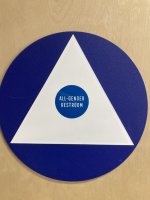
If the gender issue means I can't use the women's restroom in the US then I can't take a holiday there without risking arrest. The law needs to catch up with its own definitions of sex vs gender because the law effectively says if that person looks like a woman, talks like a woman and conducts her life like a woman, the public has right to look in her pants just to make sure. That's isn't hyperbole - it happens, though it's no real surprise that only women's restrooms are policed that way and AFAIK no trans man or cis man has yet been subjected to such scrutiny.
Saying 'I'll let you live yours' and 'it's not my issue' reminds me of the priests in the story of the good Samaritan ( it's always the Good Samaritan, because the Bible clearly had a poor opinion of Samaritans in general, but that could be another thread ). The true measure of any society can be found in how it treats its most vulnerable members and we all have a responsibility to each other, even when it's inconvenient.
I'm sorry, I didn't mean to berate you - you sound like a decent guy and thanks for not objecting.
You got me there. I'm not proud of my country, the UK, but that's part of our culture too. Most people my age think it's a shithole for a whole number of political and financial reasons outside the scope of gender. You'd be welcome to supper - bring a white wine and let me know of any dietary requirements in advanceIt's somewhat similar to celebrating the fact that you are from a particular country or culture. Go ahead and have your celebration, throw a party, but if I don't join your parade, don't accuse me of xenophobia. It's simply that your culture or ethnicity don't matter to me. (That is, unless you're going to treat me to a nice dinner of your style of food! Then I'll be interested.
Is pizza okay?
AlexBailey
Kinky Tomgirl
- Joined
- Sep 12, 2019
- Posts
- 11,359
My two cents' worth:
Strictly speaking, gender is a phenomonon of language. We see it clearly in Romance languages such as Italian or French. Nouns and pronouns are either masculine or feminine, and verb forms have to agree with the gender of the noun or pronoun. I have more experience with German, which has three genders: masculine, feminine, and neuter. The origin of the gender of some nouns is obvious, but for the life of me, I don't see why, in German, a table is masculine. There may have been, in the murky depths of the language's history, a "sexual" reason for such things. But when the word "magd" (girl), which is feminine, has the diminutive suffix "chen" (little) added to it, it becomes neuter. Go figure.
All this is to say that the very word "gender," which had rigid lines of demarcation in the grammar of languages (I believe there are languages that have more than three genders), had been carried over into discussions of human behavior. I wish we had another word to use besides gender.
Biological sex is, with the rare exceptions of XXY and XYY, binary, with the XX or XY imprinted in every cell of a person's body. Gender, is the sense of a language's structure, is also rigid. That is why we have such confusion when it comes to using a person's preferred pronoun. We are trying to apply something fixed (gender pronouns) to something as fluid as a person's perceptions of themselves and the way they express it in their behavior.
You can see the confusion in that last sentence. In "proper" English usage, I would have used himself instead of themselves, he expresses instead of they express, and his instead of their. In order to express an idea in an acceptable, "non-judgmental" and politically correct way, I've written a poorly constructed sentence and contributed a bit to the murder of the English language.
Many of the problems in "gender" discussions stem from the fact that we are applying something rigid (grammar) to something fluid (being and behavior). I wish we had another word to use besides gender in discussions like this. Maybe we can come up with something. Any suggestions?
Thanks for the thoughts about gender in language.

Having words change based on the gender of the subjects makes the speaker seek gender identity when no other need exists. The loudest voices of pushback I first heard against diversity training were complaints about having to use chosen pronouns - language often forces an assessment of someone’s gender before you have the information you need for accuracy, and many people don’t want to be bothered by something they can’t relate to or maybe even object to outright.
I think it’s important to use chosen pronouns. People should be patient when someone slips up but there are cases where some people like to antagonize. What can be done? Can assholes be legislated away? I think forced diversity inclusion has its benefits but it also creates pushback.
I like the idea of the third gender ‘neuter’ is great but it’s also nice be more personal when possible.
We - our society - our societies have serious existential issues. Why do some people get so upset about how someone else presents? Why do they use their energy objecting to something that has nothing to do with them?
Politicians and haters capitalize on any little bit of friction, it’s too bad common language keeps bringing it to a point.

AlexBailey
Kinky Tomgirl
- Joined
- Sep 12, 2019
- Posts
- 11,359
Why is the concept so fucking hard?
Exactly right. What do I care if someone is dressed like Carmen Miranda at the grocery store? The problem is all the entitled white people who think it’s their job to monitor everyone. Fucking plague on humanity!Thanks for the thoughts about gender in language.
Having words change based on the gender of the subjects makes the speaker seek gender identity when no other need exists. The loudest voices of pushback I first heard against diversity training were complaints about having to use chosen pronouns - language often forces an assessment of someone’s gender before you have the information you need for accuracy, and many people don’t want to be bothered by something they can’t relate to or maybe even object to outright.
I think it’s important to use chosen pronouns. People should be patient when someone slips up but there are cases where some people like to antagonize. What can be done? Can assholes be legislated away? I think forced diversity inclusion has its benefits but it also creates pushback.
I like the idea of the third gender ‘neuter’ is great but it’s also nice be more personal when possible.
We - our society - our societies have serious existential issues. Why do some people get so upset about how someone else presents? Why do they use their energy objecting to something that has nothing to do with them?
Politicians and haters capitalize on any little bit of friction, it’s too bad common language keeps bringing it to a point.

Paradox
Literotica Guru
- Joined
- Nov 3, 2000
- Posts
- 2,512
The problem is all the entitled white people who think it’s their job to monitor everyone. Fucking plague on humanity!
I will give you the benefit of the doubt and assume your highly racist comment is only intended to give a (older, male, and possibly entitled) white person like myself a taste of what discrimination feels like.
RobLivesInTexas
Ever-Horny Man
- Joined
- Jun 3, 2023
- Posts
- 535
The concept is great, in theory. In practice, there are enough bad people out there who take advantage of others' rights in order to do their evil deeds. And it doesn't have to have anything to do with the "gender issue" that we're discussing. I was molested in the changing room of a men's clothing store when I was fourteen. It totally messed me up, and it happened because that man was not being "monitored" by his boss.
I know we don't want to need "monitors" in all public restrooms, and I'm not smart enough to know the answer to the issues we're discussing. But some of the pushback is from the genuine concerns of some honest people who are struggling to balance rights versus responsibility.
I think it was Madison who said something about a democracy being a fit form of government only for a virtuous people. I'm afraid that still holds true. Regarding this issue of gender and gender rights, progress is, I think, being made a little at a time. Baby steps, after all, are still steps.
RobLivesInTexas
Ever-Horny Man
- Joined
- Jun 3, 2023
- Posts
- 535
As one of the "entitled white people" you refer to, I wish you wouldn't generalize like that. Some, many, maybe most of us "entitled white people" are actually a lot more evolved than you would think. If you had left out the words entitled white from your sentence, you would be completely correct.Exactly right. What do I care if someone is dressed like Carmen Miranda at the grocery store? The problem is all the entitled white people who think it’s their job to monitor everyone. Fucking plague on humanity!
Using inflammatory language does nothing to advance the discussion. By all means, express your thoughts. But please don't generalize in such a manner. That only leads to what is often referred to as revenge politics where the MO is "I'm going to make you feel the pain I've experienced." That's emotionally understandable, but it doesn't help foster real change.
Your comment about not caring "if someone is dressed like Carmen Miranda at the grocery store" is hilarious, conjuring up images of Bugs Bunny dressed just like that. I think you have a good attitude of "live and let live," but please leave out the broad brushing.
I admit that I am a racist. I hate white people. I hate old people. I hate men. So there you have it.I will give you the benefit of the doubt and assume your highly racist comment is only intended to give a (older, male, and possibly entitled) white person like myself a taste of what discrimination feels like.
stickygirl
All the witches
- Joined
- Jan 3, 2012
- Posts
- 23,692
Unfortunately there is a very vocal minority who have jumped on the trans rights wagon and become an anarchic and aggressive mouthpiece, but they don't speak for me. The trans issue isn't alone in being hijacked, because groups supporting climate change and race relations have been polarised into something the average person now finds objectionable. That makes the battle unwinnable, which is of course the aim of anarchists.The concept is great, in theory. In practice, there are enough bad people out there who take advantage of others' rights in order to do their evil deeds. And it doesn't have to have anything to do with the "gender issue" that we're discussing. I was molested in the changing room of a men's clothing store when I was fourteen. It totally messed me up, and it happened because that man was not being "monitored" by his boss.
I know we don't want to need "monitors" in all public restrooms, and I'm not smart enough to know the answer to the issues we're discussing. But some of the pushback is from the genuine concerns of some honest people who are struggling to balance rights versus responsibility.
I think it was Madison who said something about a democracy being a fit form of government only for a virtuous people. I'm afraid that still holds true. Regarding this issue of gender and gender rights, progress is, I think, being made a little at a time. Baby steps, after all, are still steps.
OTOH so has the right in politics has been affected, losing support with extreme ideas outside of any logical or reasonable standpoint. Yet they're still in our papers and on our tv screens, lauded by the press.
One might almost think this is a coordinated attack from outside our countries, or maybe it's just the result of the imbalance of power and wealth, held by a few unaccountable multi-nationals, who own our media, our food chain and what little we have left of democracy.
Madison might have been founder but he was also a rich slave owner, so I would doubt his interpretation of virtue. I'll go with another fraud, racist and misogynist, Mahatma Gandhi 'the true measure of any society can be found in how it treats its most vulnerable members.' ( Trying to find quotes about government from truly honourable people is almost impossible! )
The baby steps are not happening as far as gender rights are concerned - only jumps backward.
Last edited:
RobLivesInTexas
Ever-Horny Man
- Joined
- Jun 3, 2023
- Posts
- 535
Here are two examples of unintended consequences, for neither of which I have any real solution.
1. There are biological males (XY) who now present or identify ot whatever word you wish to use, who are competing in sports, which are, like it or not, divided into "men's" and "women's" competitions. There is an understandable push back from people who find that situation unfair to the biological (XX) females who are competing.
2. From my own field of choral music, we have examples of individuals who identify as male or female but who are biologically unable to vocally be able to sing music for "traditional" male or female voices, either because the voice hasn't changed (may never change, even with hormonal treatment) or has already changed completely. In either case, the poor choir director has the unenviable task of trying to accept and honor the individual while dealing with the realities of the music.
I like to think of myself as at least somewhat enlightened, but I must confess my, at least momentary, surprise when at a high school choir competition, one choir's tenor soloist (a fine young singer) stepped forward for his solo, his strong tenor voice and rather full beard contrasting with his formal floor-length choir gown instead of a tuxedo. I got over my initial reaction simply by focusing on the individual and the fine job he (I hope I have the right pronoun) did at the performance.
1. There are biological males (XY) who now present or identify ot whatever word you wish to use, who are competing in sports, which are, like it or not, divided into "men's" and "women's" competitions. There is an understandable push back from people who find that situation unfair to the biological (XX) females who are competing.
2. From my own field of choral music, we have examples of individuals who identify as male or female but who are biologically unable to vocally be able to sing music for "traditional" male or female voices, either because the voice hasn't changed (may never change, even with hormonal treatment) or has already changed completely. In either case, the poor choir director has the unenviable task of trying to accept and honor the individual while dealing with the realities of the music.
I like to think of myself as at least somewhat enlightened, but I must confess my, at least momentary, surprise when at a high school choir competition, one choir's tenor soloist (a fine young singer) stepped forward for his solo, his strong tenor voice and rather full beard contrasting with his formal floor-length choir gown instead of a tuxedo. I got over my initial reaction simply by focusing on the individual and the fine job he (I hope I have the right pronoun) did at the performance.
RobLivesInTexas
Ever-Horny Man
- Joined
- Jun 3, 2023
- Posts
- 535
I have read many of your posts in the Literotica Forum, and I have generally regarded them as statements from a sane, thoughtful, caring individual. Now, unless your confession is tongue in cheek, I will henceforth disregard them as merely the statements of a thoughtless sham. I pity you.I admit that I am a racist. I hate white people. I hate old people. I hate men. So there you have it.
stickygirl
All the witches
- Joined
- Jan 3, 2012
- Posts
- 23,692
You're out of date, If you check the rules for pretty much any national or international sport, transgender women are now excluded. This is old news. Until the science is better understood it is impossible for sports councils to appear to be acting impartially.Here are two examples of unintended consequences, for neither of which I have any real solution.
1. There are biological males (XY) who now present or identify ot whatever word you wish to use, who are competing in sports, which are, like it or not, divided into "men's" and "women's" competitions. There is an understandable push back from people who find that situation unfair to the biological (XX) females who are competing.
2. From my own field of choral music, we have examples of individuals who identify as male or female but who are biologically unable to vocally be able to sing music for "traditional" male or female voices, either because the voice hasn't changed (may never change, even with hormonal treatment) or has already changed completely. In either case, the poor choir director has the unenviable task of trying to accept and honor the individual while dealing with the realities of the music.
I once attended a choral service at an Oxford college, where a man was singing Alto - he had a beautiful voice, if a little too powerful to blend in. Our teacher explained he was married with two kids, so that was the end of any sniggers. As I'm sure you know, historically most church music was written for all male choirs - William Byrd springs to mind.I like to think of myself as at least somewhat enlightened, but I must confess my, at least momentary, surprise when at a high school choir competition, one choir's tenor soloist (a fine young singer) stepped forward for his solo, his strong tenor voice and rather full beard contrasting with his formal floor-length choir gown instead of a tuxedo. I got over my initial reaction simply by focusing on the individual and the fine job he (I hope I have the right pronoun) did at the performance.
ETA Byrd was a sod to sing because he pitched everything so high. He used to leave my vocal chords aching but I was lucky enough to sing his and other works in some fab cathedrals in the UK, including this gorgeous piece by Allegri but again pitched so high... I guess people were simply smaller then?!
Last edited:
RobLivesInTexas
Ever-Horny Man
- Joined
- Jun 3, 2023
- Posts
- 535
The male alto is called a countertenor, and it is a vocal art especially cultivated in England. Some like the sound of countertenors. I, personally don't care for it much.You're out of date, If you check the rules for pretty much any national or international sport, transgender women are now excluded. This is old news. Until the science is better understood it is impossible for sports councils to appear to be acting impartially.
I once attended a choral service at an Oxford college, where a man was singing Alto - he had a beautiful voice, if a little too powerful to blend in. Our teacher explained he was married with two kids, so that was the end of any sniggers. As I'm sure you know, historically most church music was written for all male choirs - William Byrd springs to mind.
An older attempt to have male singers sing high was the castrato. During the time period when castrati were highly valued, successful castrati became famous and wealthy. That explains the number of boys who had "accidents" with the family goat due to parental expectations of fame and wealth. The title role in Handel's Julius Caesar was sung by a soprano castrato. In the few modern revivals of this opera, that role is sung either by a female soprano (what is called a "trousers" role), a countertenor (not very successfully due to limits of range and agility), or a conventional tenor, transposed down an octave (which throws out a lot of the musical balances of Handel).
The tradition of all-male choirs worked because it included unchanged boys' voices. I wonder how the old choir masters would have handled the modern issue of gender?
stickygirl
All the witches
- Joined
- Jan 3, 2012
- Posts
- 23,692
That would probably out of his hands if the church authorities had anything to do with it - which they would. Crikey, don't get me started on religion, please!The male alto is called a countertenor, and it is a vocal art especially cultivated in England. Some like the sound of countertenors. I, personally don't care for it much.
An older attempt to have male singers sing high was the castrato. During the time period when castrati were highly valued, successful castrati became famous and wealthy. That explains the number of boys who had "accidents" with the family goat due to parental expectations of fame and wealth. The title role in Handel's Julius Caesar was sung by a soprano castrato. In the few modern revivals of this opera, that role is sung either by a female soprano (what is called a "trousers" role), a countertenor (not very successfully due to limits of range and agility), or a conventional tenor, transposed down an octave (which throws out a lot of the musical balances of Handel).
The tradition of all-male choirs worked because it included unchanged boys' voices. I wonder how the old choir masters would have handled the modern issue of gender?

RobLivesInTexas
Ever-Horny Man
- Joined
- Jun 3, 2023
- Posts
- 535
Stickygirl, you're a lot of fun! I don't know how much you and I agree or disagree on anything at all, but you're a great conversationalist, and I look forward to your responses.That would probably out of his hands if the church authorities had anything to do with it - which they would. Crikey, don't get me started on religion, please!
stickygirl
All the witches
- Joined
- Jan 3, 2012
- Posts
- 23,692
Oh fuck, are you hitting on me or is that an interrogative in yer pocket?Stickygirl, you're a lot of fun! I don't know how much you and I agree or disagree on anything at all, but you're a great conversationalist, and I look forward to your responses.
RobLivesInTexas
Ever-Horny Man
- Joined
- Jun 3, 2023
- Posts
- 535
My interrogative is substantially sized.Oh fuck, are you hitting on me or is that an interrogative in yer pocket?
I just read all of your poems, very nice work indeed. The one about the rape survivor hit home. I was molested once in the changing room of a clothing store. That was 51 years ago, and it still hurts.
Last edited:
stickygirl
All the witches
- Joined
- Jan 3, 2012
- Posts
- 23,692
ThanksMy interrogative is substantially sized.
I just read all of your poems, very nice work indeed. The one about the rape survivor hit home. I was molested once in the changing room of a clothing store. That was 51 years ago, and it still hurts.
Sadly there's far more of such crimes than most people realise and without being able to talk about it to find some resolution, the wounds never heal and remain as raw as they ever were. My friend took a long time to get through that period of her life and was able to get help, but nothing can ever undo what happened
ETA you may need to remove the age reference because of Lit's rules.
Last edited:
RobLivesInTexas
Ever-Horny Man
- Joined
- Jun 3, 2023
- Posts
- 535
Thanks
Sadly there's far more of such crimes than most people realise and without being able to talk about it to find some resolution, the wounds never heal and remain as raw as they ever were. My friend took a long time to get through that period of her life and was able to get help, but nothing can ever undo what happened
ETA you may need to remove the age reference because of Lit's rules.
Thanks
Sadly there's far more of such crimes than most people realise and without being able to talk about it to find some resolution, the wounds never heal and remain as raw as they ever were. My friend took a long time to get through that period of her life and was able to get help, but nothing can ever undo what happened
ETA you may need to remove the age reference because of Lit's rules
Editing done. Thanks for the heads up. I know about the rule for stories, but it didn't occur to me regarding the forums.Thanks
Sadly there's far more of such crimes than most people realise and without being able to talk about it to find some resolution, the wounds never heal and remain as raw as they ever were. My friend took a long time to get through that period of her life and was able to get help, but nothing can ever undo what happened
ETA you may need to remove the age reference because of Lit's rules.
Biguy77578
Very Experienced
- Joined
- May 6, 2020
- Posts
- 1,235
I was born male and had sex with men before females. I love sex with both. No mater what gender a person says they are i would enjoy having sex with them if they are sane. I love women and i'm married to a woman but i love sex period regardless of what gender they choose.

Bigboobbabe
Literotica Guru
- Joined
- Nov 14, 2019
- Posts
- 2,459
You start a fantastic point, and I would to support it and hopefully add to it.I believe the term "gender" has quickly become the most misunderstood word in the history of language.
What was, in the past, a definitive descriptor of the expected distinctions between the two biological sexes, is now a term that has evolved in lock-step with the exploration of our own social and sexual identities. It becomes a problematic only for those people who wish to conflate gender and biological sex as synonymous concepts. They are far from it.
Biological sex is binary. Like it, or not, it is a finite science. It is THE reason our species can proliferate. Many people who disagree with this concept tend to also believe gender is a social construct...
Which means they believe gender roles are "made up". Many people who disagree with this concept tend to believe gender isn't a spectrum...
Which means they believe gender is binary.
Herein lies the confusion. Some people choose not to, or are unable to, distinguish between the two. I look at it like this.
Biological sex is as concrete as a law of physics, but to consider gender a social construct actually underestimates the breadth of the concept. It isn't made up or make-believe.
To me, gender is the measure of where an individual happens to land on the social spectrum. That measure is as unique as a fingerprint. And that's ok. The sooner we can all agree that men just aren't 100% masculine and women's aren't just 100% feminine, the quicker we can get back to a more harmonious society.
Biological sex is finite. If you have a Y chromosome, you are male. If you lack a Y chromosome, you are female.
XX, XXX, XXY, XY. All are common (relatively) chromosomal karyotypes, also known as genotype.
Phenotype describes how genes are expressed.
A person with both chromosomes for brown eyes will always express eye color as brown. A person with no chromosomes for brown eyes (meaning 2 blue eyed chromosomes) will always express eye color on the blue/gray spectrum.
A person with one chromosome for brown and the other for blue, can express eye color as brown, blue, or colors along the green/gold spectrum.
There is more to it, but this is a basic rule down.
Sex = biological male/female is genotype.
Gender = Girl/boy/nonbinary is phenotype.
Environmental factors impact phenotype. But cannot change genotype. Sex is finite, defined, and can be proven by science.
Similar threads

- Replies
- 68
- Views
- 3K

- Replies
- 16
- Views
- 1K

- Replies
- 102
- Views
- 4K


- Replies
- 416
- Views
- 17K

- Replies
- 158
- Views
- 9K
Share: