
onehitwanda
Venatrix Lacrimosal
- Joined
- May 20, 2013
- Posts
- 5,550
Or in norks. Or jumblies.Or in jugs.
Follow along with the video below to see how to install our site as a web app on your home screen.
Note: This feature may not be available in some browsers.
Or in norks. Or jumblies.Or in jugs.

Sorry I forgot about this a few years ago. If you look up "ejaculation Prayer" in Wiki, you will find this:
In Christian piety, an ejaculation, sometimes known as ejaculatory prayer or aspiration, is "a short prayer, in which the mind is directed to God, on any emergency." “A sigh, a devout aspiration, a holy ejaculation, will oftener pierce the sky, and reach the ear of Omnipotence, than a long set exercise of prayer...”.
I don't see how it's doubling up on the "premature;"
The cryptic form I'm used to, as described e.g. here, has two discrete parts to it. One is a word or phrase that approximately defines the answer as a whole, similar to the clue one would expect in a non-cryptic crossword, and the other part defines the individual elements of the crossword."too soon" = premature. A "short prayer" is an "ejaculation." And that doesn't seem to be much of "a stretch."
We have cryptic crosswords here too!Looking through this thread, I have to say, I can't believe you're not British. I didn't know aussies were so... cryptically inclined

Turkey baster?Bird's crazy breast results in lesbian pregnancy (6, 6).

feels like a bit of a stretch, especially since it's doubling up on the "too soon". I guess I misread it.I didn't say it was...
Never heard of that rule for cryptic crossword clues. It seems to me that if one is required to give a non-cryptic clue, it negates the whole sense of cryptic crosswords. Then again, maybe things are different across the Wallace Line.The cryptic form I'm used to, as described e.g. here, has two discrete parts to it. One is a word or phrase that approximately defines the answer as a whole, similar to the clue one would expect in a non-cryptic crossword, and the other part defines the individual elements of the crossword.
So for instance, in @nice90sguy's example above:
Genital mangling sums up the story
Here "sums up the story" is the basic definition: a tag line sums up the story. "Genital mangling" is the cryptic half: "mangling" suggests an anagram, and rearranging "genital" gives us "tag line".
Another example dredged up from memory: "preacher beheaded for setting fires (5)". Here "setting fires" is the definition of the whole, and "preacher beheaded" is "parson" minus its first (head) letter, so either half of the clue gives us "arson".
For your clue, "too soon" gives us "premature" and "short prayer" gives us "ejaculation", but I don't see the non-cryptic half of the clue, something that would define "premature ejaculation" as a single concept. Take away the cryptic components and we're left with "Is it... for a" which doesn't really suggest "premature ejaculation".
The only way I can get something that suggests the whole concept is by thinking of "is it too soon" as something somebody might say when premature-ejaculating, which seems like a weak link, and also reuses the "too soon" that was cluing "premature" specifically.
Correct!Turkey baster?
Never heard of that rule for cryptic crossword clues. It seems to me that if one is required to give a non-cryptic clue, it negates the whole sense of cryptic crosswords.
AFAIK it works the same in Canada?Then again, maybe things are different across the Wallace Line.

"decapitated man" = "an", "Roman dwelling" = "villa", so "vanilla"Got ^^^ but won't spoil
Decapitated man in Roman dwelling is far from kinky (7)
vanilla ("an" - decapitated man inserted in "villa" - Roman dwelling.)Got ^^^ but won't spoil
Decapitated man in Roman dwelling is far from kinky (7)
I see what you mean, Bramblethorn, but we've never required that as part of a cryptic clue. Perhaps you'd prefer "Arriving too soon for a short prayer?"Not really, IME. The definitions tend to be a little bit vaguer than you'd see in a standard crossword, and it's often not obvious which part of the clue is the definition.
AFAIK it works the same in Canada?
Take the Globe and Mail's examples, for instance: https://www.theglobeandmail.com/puzzles-and-crosswords/cryptic-crossword/?L=help There are a few clue forms which are exceptions, e.g. the "bluff" example there, but most of them have a definition somewhere in them. "Doris has her ingredients for sauce (11)": "ingredients" clues an anagram, and "Doris has her" rearranges to "horseradish" - which is a sauce.
Or "Strain starting to undermine nervous energy (4)": "starting" hints that one should take the first letters of words, and To Undermine Nervous Energy gives us "tune", and "strain" is the definition. But there "nervous energy" tricks the reader into thinking about strain in the sense of mental stress, not in the sense of a strain of music.
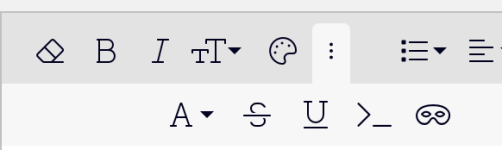
Thanks for the tip.BTW, for those who want to post answers without spoiling for those still working on them: if you click the three dots at the top of the post window for "more options", then click the "Inline spoiler" option (the mask on the right), it will insert spoiler tags and you can then write your answers between them. Clicking on the spoilered text reveals it.View attachment 2232869


